EKHAYA – HOME

Ekhaya is a series of woven artworks made with organic elements and natural yarn by Bosch, a born South African who explores her identity and connection to her homeland. The title of the series comes from the Xhosa word for home, one of the eleven official languages of South Africa. It also contains the Afrikaans word ek, meaning me or I, another official language of the country. Bosch uses these linguistic references in all the titles of this series to express her personal and cultural roots, as well as the diversity and complexity of South African society.

Bosch’s artworks are inspired by the natural elements and materials that she encountered in her childhood and that remind her of her motherland. She collects seeds and dried flowers from different regions and seasons, and weaves them together into intricate art pieces. She also incorporates other objects, such as beads, shells and wire that have symbolic or sentimental value for her. Bosch’s artworks are not only visual, but also tactile and olfactory, as they invite the viewer to touch and smell the organic textures and fragrances.

Bosch’s artworks are a reflection of her longing and love for her homeland, as well as a celebration of its beauty and diversity. She creates a sense of home through her woven artworks, which are both personal and universal, and which evoke memories and emotions. Bosch’s artworks are also a tribute to the traditions and skills of weaving and beadwork, which have been practiced by many cultures and generations in South Africa and around the world.


Imfibinga

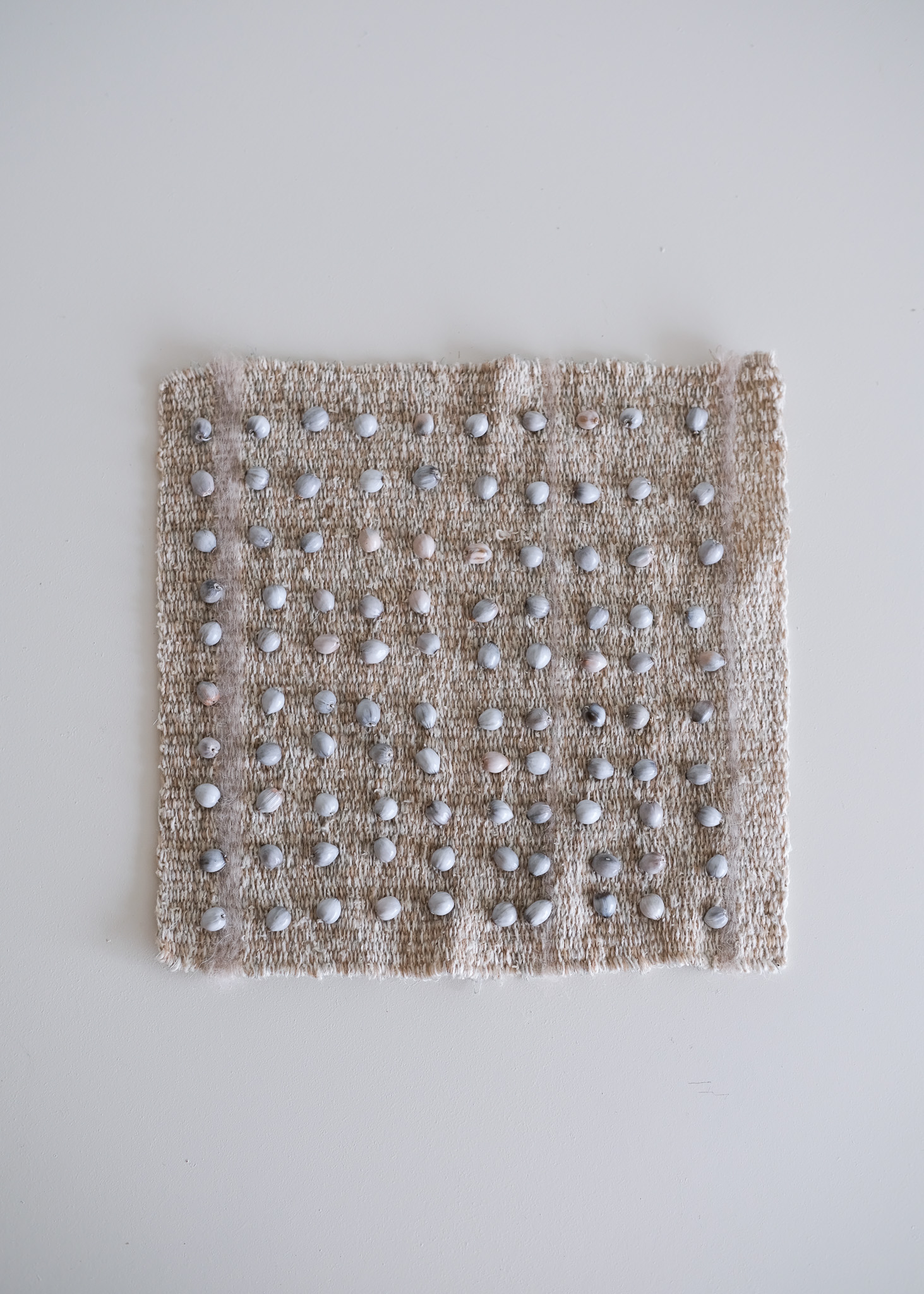
Imfibinga reflects Bosch’s ongoing exploration of memory, belonging and the emotional connection held within natural materials. Woven together using silk, mohair, cashmere, cotton and Imfibinga seeds, the work exists somewhere between textile, sculpture and personal archive.

Imfibinga seeds, often referred to as Zulu beads, carry strong cultural and personal significance for Bosch. Growing up in South Africa, these small organic forms existed quietly within everyday life — within adornment, craft traditions, spiritual symbolism and childhood memory. Over time they became less like objects and more like vessels of place, carrying within them a deep emotional connection to home.

The woven structure developed slowly and intuitively, almost as a conversation between fibre and form. Soft animal fibres wrap themselves around the dark seeds, creating clusters that feel protective, bodily and organic. Bosch was drawn to the tension between softness and solidity, delicacy and permanence — allowing the seeds to interrupt the woven surface like fragments of memory embedded within cloth.

For Bosch, the work reflects on the experience of carrying pieces of home across distance. The Imfibinga seeds become markers of identity and remembrance, quietly speaking of migration, cultural memory and the intimate relationship between people and landscape.

Through Imfibinga, Bosch explores how natural materials can become emotional archives — holding stories of ancestry, longing and belonging within their surfaces.

Imfibinga seeds, Silk, Mohair, Cashmere, Cotton

25,5 x 25 cm


Onder die karob boom – under the karob tree

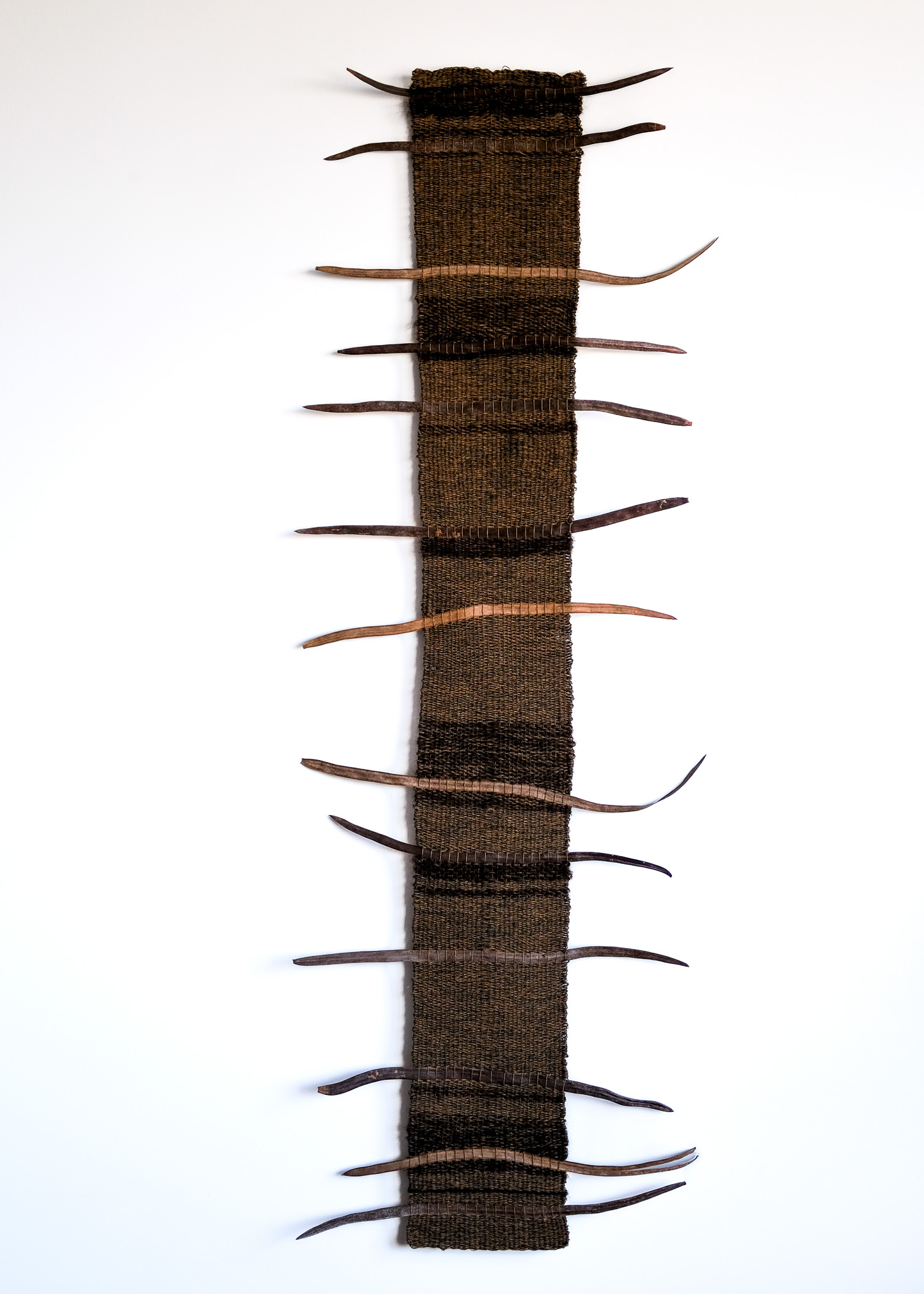
Onder die Karob Boom is an especially sentimental piece for Bosch. Woven together in an organic, almost meditative manner, the work reflects on memory, family, migration and the deep emotional connection we carry toward the landscapes that shape us.

The carob seeds used within the work were gifted to Bosch by a close aunt, with whom she spent much of her childhood on bush holidays throughout South Africa. The seeds were intentionally gathered with Bosch and her art in mind, before later being carried from South Africa to the Netherlands by her mother. Through this journey, the materials themselves became vessels of love, memory and belonging.

The work leans into the tenderness of shared family moments spent in nature — the warmth of childhood memories, dry earth beneath bare feet, long drives through the bushveld and the quiet comfort of being surrounded by familiar landscapes. At the same time, the piece reflects on the ache that often follows leaving one’s homeland and childhood behind.

The carob tree itself also becomes a quiet metaphor within the work. Known for its resilience and longevity, it mirrors the emotional experience of carrying fragments of home across time and distance. The woven form becomes a small archive of remembrance — holding together memory, love, grief, ancestry and place.

For Bosch, Onder die Karob Boom exists somewhere between textile, sculpture and personal memory. It is a tactile reflection on the enduring relationship between family, her homeland and the natural objects that continue to tether her to home.

Mohair, Cotton, Cashmere, Carob seeds from SA

39 x 113,5 cm


Mmoho – Together

Mmho, meaning “together” in Sesotho, is an ongoing woven sculptural series exploring connection, gathering and collective identity.

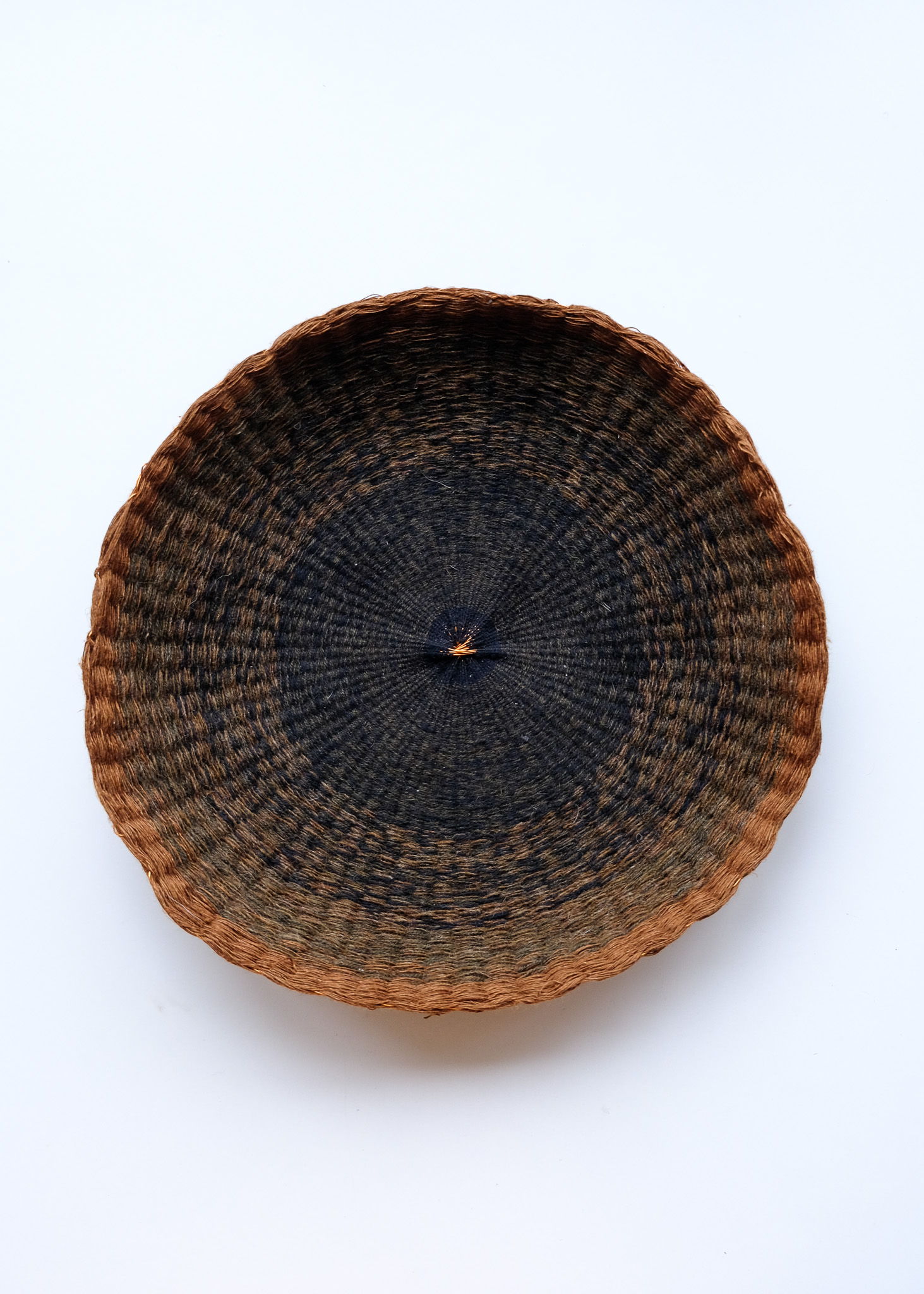
This first piece takes the form of a circular woven structure that can be manipulated and reshaped into different formations. Bosch was drawn toward the circle as both a physical and symbolic form — something continuously found throughout nature within nests, seeds, flora, gathering spaces and celestial cycles. The circle speaks of continuity, return and the interconnectedness that exists between people and the natural world.

Through weaving, Bosch explores the act of bringing together. Separate fibres crossing over one another to create tension, softness, movement and unity. The work is loosely guided by ideas surrounding Ubuntu — “I am because we are” —  the understanding that human existence is shaped through relationship, collective care and shared experience.

The inclusion of copper wire introduces both structure and cultural memory into the piece. Traditionally used throughout many South African craft practices, the copper acts almost like a living line running through the textile — grounding the softer linen and cotton fibres while allowing the woven form to bend, shift and evolve.

Unlike a fixed sculptural object, Mmho remains adaptable and open-ended. Bosch is interested in how the piece can continue transforming through movement and interaction, reflecting the fluid and ever-changing nature of community, identity and belonging.

Existing somewhere between textile, sculpture and ritual object, the work reflects on humanity’s enduring desire to gather, connect and exist together.

Part one of Mmho.
Copper wire, Cotton and Linen.

∅28cm